Calendari de conferències
El dilluns 27 de novembre, a les 19 hores, l’Aula Magna de l’Edifici Històric de la Universitat de Barcelona acollirà la primera d’aquestes xerrades, titulada «Explosions de supernova: la persistència de la memòria». Serà a càrrec de Carles Badenes, investigador de la Universitat de Pittsburgh i professor visitant a l’ICCUB, on col·labora amb l’equip de recerca de la missió Gaia, projecte de l’Agència Espacial Europea per elaborar el catàleg més precís de la Via Làctia que s’ha fet mai.
En aquesta conferència, Badenes abordarà el tema de les explosions de supernoves: què són, quin paper tenen en l’evolució estel·lar, i com es relacionen amb l’origen dels elements químics al nostre Univers. També parlarà d’un tipus d’explosions concretes, les anomenades supernoves termonuclears, que a dia d’avui segueixen sent un misteri per als astrofísics.
El divendres 15 de desembre, a les 12.45 h, tindrà lloc la segona conferència a la Facultat de Física de la UB (aula A22G). Salvador J. Ribas, director del Centre d’Observació de l’Univers, al Parc Astronòmic Montsec (Àger, la Noguera), i col·laborador de l’ICCUB, impartirà la ponència titulada «La contaminació lumínica, el cantó fosc de la llum».
La xerrada partirà d’una paradoxa: la introducció de l’enllumenat artificial a les nostres vides va suposar un gran canvi i avenç, però alhora, aquesta llum artificial té un «cantó fosc», amb moltes ramificacions que van més enllà de les observacions astronòmiques i que arriben a la nostra vida quotidiana. Ribas mostrarà els efectes més rellevants de la contaminació lumínica i plantejarà propostes que podem fer nosaltres mateixos per reduir-la.
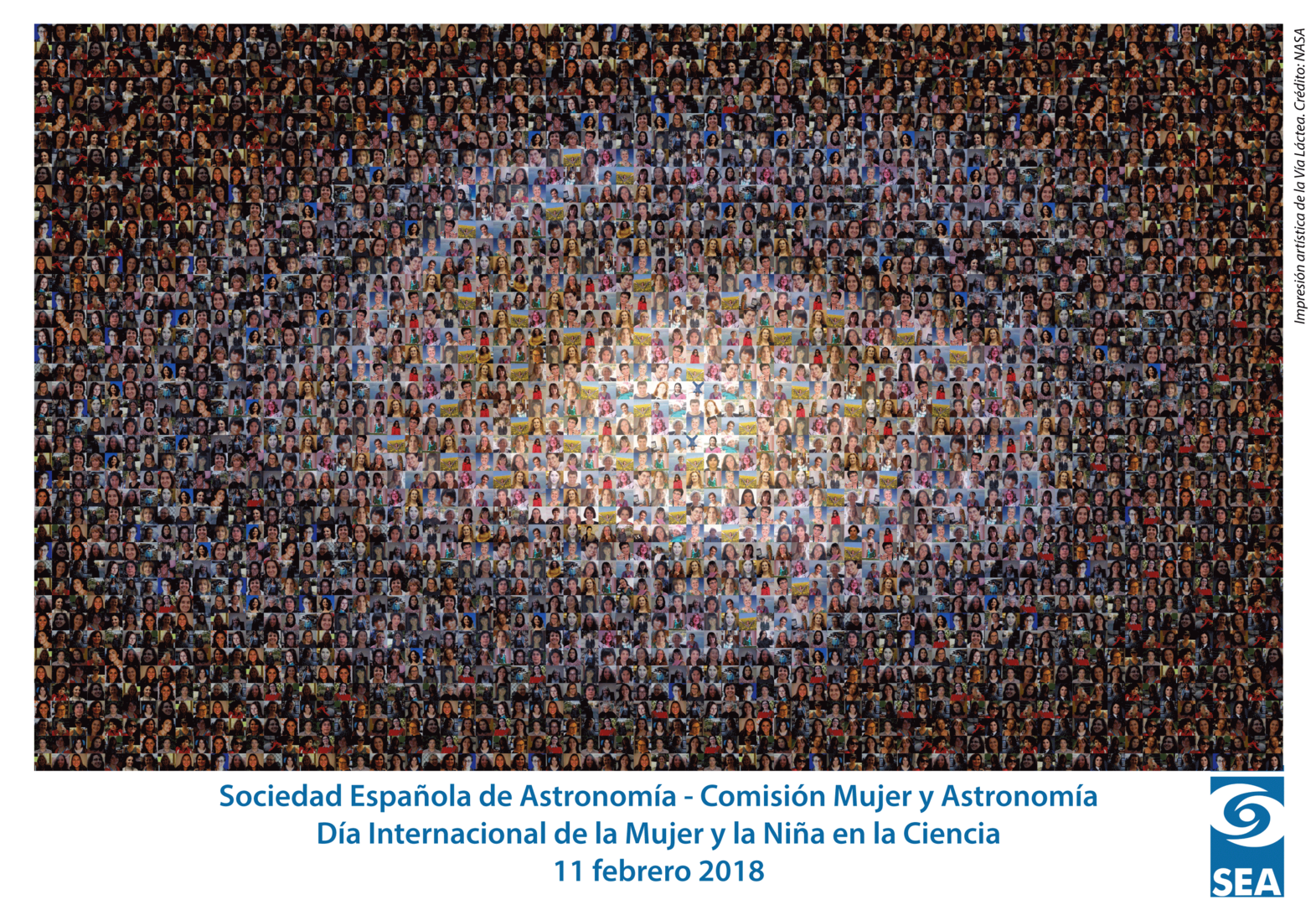
Vint-i-cinc anys de la Societat Espanyola d’Astronomia
La Societat Espanyola d’Astronomia (SEA), que té la seu a la Facultat de Física de la UB, es va fundar el 20 de novembre de 1992 com a entitat que agrupa diversos professionals d’institucions que treballen en l’àmbit de l’astronomia arreu de l’Estat. A dia d’avui, la SEA inclou un total de 770 professionals i està presidida per Francesca Figueras, investigadora de l’Institut de Ciències del Cosmos (ICCUB, IEEC-UB) i del Departament de Física Quàntica i Astrofísica.
L’objectiu de la societat és contribuir al desenvolupament de l’astronomia i l’astrofísica a Espanya i promoure aquest camp del coneixement. En particular, també es proposa crear un fòrum independent per a la discussió d’assumptes d’interès comú per a la comunitat astronòmica espanyola.
El programa complet de les conferències del 25è aniversari de la SEA es durà a terme en múltiples localitzacions amb ponències que tractaran temàtiques diverses, com els forats negres gegants o les ones gravitacionals, entre d’altres.
Per a més informació sobre les activitats, consulteu aquest enllaç.
An international team led by ICCUB researcher H. Witek has been awarded a prestigious 15 million CPU hour high-performance computing time grant by PRACE, the Partnership for Advanced Computing in Europe. The project “ProbPhysGrav – Probing fundamental physics with gravity”, running from 2 October 2017 to 30 September 2018, will shed new light on some of the most intriguing mysteries in gravity and cosmology using gravitational waves.
The ground-breaking observations of gravitational waves by advLIGO/VIRGO have opened a new observational window to answer open questions in physics. For example, the constituents and properties of dark matter are still an open puzzle, and there are numerous open issues concerning the inflationary phase of our universe. In both cases we expect to observe characteristic gravitational wave signatures with current or future detectors. How they would look like exactly, however, is yet unknown. Moreover, having theoretical predictions of the expected signals is essential to identify them in the data and to understand their meaning. This is precisely the goal of the project: simulate the early stages of our universe and the collision of black holes in dark matter environments in the most violent, highly dynamical regime of gravity and predict their gravitational wave signatures to confront theory with observations.
The computations required to obtain these predictions from the equations of General Relativity are so complex that they can only be performed by very powerful supercomputers. PRACE is a pan-European Research Infrastructure for High Performance Computing consisting of several Tier-0 supercomputers distributed across the continent, including MareNostrum at the Barcelona Supercomputing Center (BSC), where the project “ProbPhysGrav” is running.
Helvi Witek is a Marie Curie research fellow in the Gravitation and Cosmology group of ICCUB. Her main research interests are numerical relativity, black hole and gravitational wave physics, and their applications in high-energy physics and cosmology. She carried out her PhD studies on black hole collisions in higher dimensional spacetimes at the Centro Multidisciplinar de Astrofisica (CENTRA)/ Universidade de Lisboa. After graduating in 2012, she joined the Department of Applied Mathematics and Theoretical Physics (DAMTP) / University of Cambridge (2012-2015) and the School of Mathematical Sciences / University of Nottingham (2016), where she developed new techniques to investigate the interplay between black holes and fundamental fields, and to study the formation of black holes in extensions of GR. She became an ICCUB member in September 2016.
Apart from H. Witek, her team consists of researchers from 7 institutions all over Europe including CENTRA / IST (M. Zilhão), King's College London (E. Lim, J. Cook, T. Helfer), CERN (D. Blas), University of Goettingen (K. Clough), Queen Mary University London (H. Bantilan, P. Figueras) and the University of Cambridge (W. Cook, M. Kunesch, R. Rosca, U. Sperhake).
Interview
Interview by Mujeres con Ciencia
Presentation
Domènec Espriu, Professor of Theoretical Physics at the University of Barcelona and researcher of the ICCUB, has been vice-rector of research of the University of Barcelona since December 2016, when he took office as a member of the new governing team lead by Joan Elias. During his term of office, D. Espriu will be responsible for the UB research institutes, the UB research support office as well as the institutional relations in the field of science policy and the research staff policy.
D. Espriu obtained his PhD at the University of Barcelona in 1982 and became professor of this university in 1988, after holding postdoc positions at the Universities of Oxford and Harvard and a professor position at the University of Valencia. In the year 2000 he was awarded the Research Distinction by the Generalitat de Catalunya, and in 2014 he was elected professor honoris causa by the State University of Saint Petersburg.
Throughout his career, D. Espriu has combined his research with science management activities. He has held relevant positions such as head of department (2000-2003), coordinator of the Spanish Funding Agency for Particle Physics (2004-2007), vice-chairman of the Astroparticle Physics European Coordination Committee (2004-2007) and chairman of CERN's Computing Resources Scrutiny Group. He was one of the main promoters of the Institute of Cosmos Sciences, becoming its first director in 2007 (2007-2009).
His scientific interests cover a wide spectrum of topics within the field of theoretical physics, from phenomenology aspects of particle physics and astrophysics to more theoretical issues concerning gravitation and quantum field theory. Up to now he has supervised 10 doctoral theses and has published 94 articles in peer-reviewed journals.
Interview
By ICCUB Scientific Office
The new governing team has insisted that one of its main goals is to boost research at the University of Barcelona. What actions are you willing to undertake to materialize this boost?
For us, the key element of research is the human capital. Over the last ten years faculty staff at the UB has, on average, grown older. Furthermore, many vacant positions resulting from retirement have been filled with temporary staff contracted as associate professors. This has considerably devalued the research capacity of our university.
We want to fill the vacant positions with people who have demonstrated high scientific quality, who have research merits. For faculties of science this means the incorporation of Ramon y Cajal researchers. If economic conditions permit, we will encourage them with a welcome pack.
We would also like to give an impulse to joint appointments, maybe by offering part-time professorships to researchers such as ICREAs. The University of Barcelona is a center of prestige and we believe that this can attract good researchers.
What is the UB-100 strategy about?
We want the University of Barcelona to be positioned within the first 100 research institutions in the main quality rankings. However, this is a long-term goal, it will take ten or fifteen years at least... It is very hard to ascend in this kind of rankings because to get in you have to displace a very good university.
What does it mean, for the UB, to be part of the League of European Research Universities (LERU)?
To begin with, it is an honor. The LERU gathers the most prestigious universities in Europe. Also, being part of the LERU represents a great opportunity for the UB to debate issues concerning human resources, governance and research at universities. But above all, the LERU is a lobby with presence in Brussels: in all the meetings of the commission that have something to do with research, there is a representative of the LERU. Apart from this, the UB intends to adopt little by little LERU proposals and good practices.
What is the role of research institutes at the UB?
With our research institutes we want to increase the visibility of research and promote synergies among different disciplines. This does not mean, though, that research is only done in institutes. There are researchers at the UB that are not members of any institute, and they are doing excellent research.
Is the current governing team planning to undertake any new action in relation to institutes?
We are planning to create new structural positions for technologists and project managers that will be linked to institutes and research groups. We also want to promote the participation of institutes in the María de Maeztu program. There are already two institutes of the UB that have this distinction and, in the last call, the IN2UB was very close to get it. We are ambitious and we would like to have more institutes with this accreditation of excellence. Shortly, a systematic evaluation of institutes will be established. This evaluation will result in a classification and a set of recommendations which should have consequences for the research program contract and in some cases could lead to a redirection of institutes.
What would you highlight about your contribution to the ICCUB?
The satisfaction of having created it, with the aid of many other people. I am very glad it has become a Unit of Excellence María de Maeztu.
And about your six first months in office as vice-rector of research?
The chance to meet marvelous people at the university, as well as excellent research groups and professionals.
This asteroid was discovered on November 17, 1941, in Fabra Observatory, by Isidre Pòlit i Buxareu, who was also professor of Astronomy of the UB and director of the Astronomical Area of the Fabra Observatory between 1937 and 1957. Pòlit gave name to another asteroid, the 1708 Polit, discovered in 1929 by Josep Comas i Solà.
The asteroid (4298) Jorgenunez was the last asteroid to be discovered in Fabra Observatory. It has an orbital period of 5.3 years around the Sun, which corresponds to the asteroid belt between Mars and Jupiter, and it has a 16.5 km diameter, quite big for these kinds of celestial objects. The technique they used to look for asteroids, similar to the current one, consisted on making two expositions, separated by a spacetime. According to Jorge Núñez, “each object shows two images which are almost vertically put; however, the asteroid’s two images show an inclination of 45º between them, thus different from the rest of the objects (background stars)”. This shows that “it is a moving object, that is, an asteroid”.
The naming process of an asteroid can last two decades. It starts when two observations of a potentially new object are done and it is told to the Minor Planet Center of the International Astronomical Union (IAU). Then a provisional designation of the object is done, and its final name is not confirmed until there are enough observations to verify this finding. Regarding the asteroid (4298) Jorgenunez, there have been a total of 1.677 observations from 1941 (its discovery) to 2017.
The asteroid’s file card of the Minor Planet Center provides information on the main features of this celestial body and it describes the contribution of the researcher after whom it’s named: “The physician and astronomer Jorge Núñez is mostly interested in the robotic observations and CCD imaging, an area in which he has contributed to with several reviewed articles. Since 2002, he has been member of the Royal Academy of Arts and Sciences of Barcelona”.
Núñez is a permanent researcher at the Institute of Science Cosmos of the UB (ICUB-IEEC) and professor of the the Department of Quantum Physics and Astrophysics of the University of Barcelona. He is also a member of the IAU’s Commission A1 “Astrometry”. He was visiting lecturer at Yale University and made a scientific stay at the University of Caliornia – Berkeley. He promoted the robotic telescope Fabra-ROA Montsec, located in the Astronomical Park Montsec, where researchers study space debris, exoplanets, potentially hazardous objects and sources of high-energy emission, among others. He has been director of the Fabra Observatory since February 2015.
Eighty experts in Theory, Modelling and Measurements of light pollution from 20 countries have participated. The conference has been organized by the Parc Astronòmic Montsec (PAM), Comenius University in Bratislava, Slovak Academy of Sciences, and the Cégep de Sherbrooke in Quebec in Canada.
During the Congress, has begun process of preparing the Montsec nomination for the certification of the Dark Sky Association (IDA), which will open the possibility of accessing to the astronomical tourism market.
One of the papers presented in the conference has been "First Night Sky Modeling Montsec protected area of light pollution and its sources" by Hector Linares, master of astrophysics at the University of Barcelona. To make this first model, the main sources of light pollution in the area have been evaluated, and in particular Lleida, the largest city near Montsec.
Thorne is currently a Feynman Professor of Theoretical Physical, Emeritus, at the California Institute of Technology (Caltech). He was one of the promoters of LIGO, the observatories that made the first detection ever of gravitational waves in 2016. This discovery makes him a firm candidate for the next Nobel Prize in Physics.
During his visit to Barcelona Thorne was awarded an honorary doctoral degree by the Universitat Politècnica de Catalunya (UPC).
This is an application to compute and simulate astronomical events. A tool for astronomy lovers that allows to know in a simple way the general and local circumstances for solar and lunar eclipses and planetary transits.
Eclipse is an app created by Eduard Masana, researcher of the Institute of Cosmos Sciences, ICCUB (IEEC-UB), and a member of the Department of Quantum Physics an Astrophysics.
Versió en català Versión en español
- The new ICCUB facilities, which are about 500 square meters in size, have been officially inaugurated today in a ceremony attended by the Secretary of State for Research, Development and Innovation, Carmen Vela; the Secretary for Universities and Research, Arcadi Navarro; and the UB rector, Joan Elias.
- The new technology unit will apply the expertise acquired in space science and particle physics projects to other fields, such as medicine, genomics and marine geociences.
Barcelona, 11 May 2017. The Institute of Cosmos Sciences of the UB (ICCUB) has set up a Technology Unit (ICCUB-Tech) that will develop instrumentation and big data systems for scientific and technology projects, as well as for companies. The inauguration ceremony of the new facilities of the ICCUB, a center awarded with the María de Maeztu distinction, has been held today, 11 May, with the participation of the Secretary of State for Research, Development and Innovation, Carmen Vela; the Secretary for Universities and Research of Generalitat de Catalunya, Arcadi Navarro; the rector of the University of Barcelona, Joan Elias; and Lluís Garrido, director of the ICCUB. The new facilities are located at Parc Científic de Barcelona and take up about 500 square meters.
During her speech, Carmen Vela has emphasized the high scientific quality achieved by the ICCUB, “a center which has earned a place «among the Spanish research elite and which meets exactly the same scientific quality requirements as the ones imposed to Severo Ochoa Centers». «The ICCUB, » continued Vela, «generates first order scientific output, attracts talent and manages to benefit society through knowledge transfer. It is an example of what we want R&D to be in Spain. We do not need to look outside to find models because we have them here, in Severo Ochoa centers and María de Maeztu Units.»
Rector Joan Elias has underlined «the added-value that having a specialized institute provides to create the critical mass required to apply in Centers of Excellence calls such as María de Maeztu Units».
For its part, Arcadi Navarro has referred to the last years of crisis: «It has been ten tough years, but also golden years for research in Catalonia and Spain».
On the other hand, during his presentation of ICCUB-Tech, the ICCUB director Lluís Garrido has claimed that «this unit represents a unique opportunity to centralize resources, promote synergies within groups of engineers and take on new challenges, as well as to transfer this technology to society».
Transversal unit
ICCUB-Tech gathers engineers specialized in instrumentation, electronics and big data who, before the creation of the unit, worked within different research groups of the ICCUB developing technology for space missions, telescopes, accelerators and particle detectors.
The aim of this unit is to centralize and increase the technological activity of the ICCUB and to allow all its members to participate in high-tech projects, giving them assessment and direct support.
At present the unit consists of 25 electronic and telecommunication engineers, computer specialists and physicists and includes, among other facilities, an electronics lab, a precision measurement lab and a clean-room for instrumentation assembly. Further equipment is foreseen to be installed to develop instrumentation for radiation detectors, cameras and space projects.
Technology Transfer
The ICCUB has an important role in international projects such as Gaia and Solar Orbiter missions, from the European Space Agency; LHCb experiment of the Large Hadron Collider, located at CERN; and gamma ray telescopes Magic and CTA. One of the aims of ICCUB-Tech will be to look for technology transfer projects where the expertise acquired in these big scientific projects can be applied, so that their results can also benefit society.
Among such projects, at the moment ICCUB-Tech is applying technology developed for LHCb chips to improve the temporal precision in positron emission tomography (PET). A second example is the application of a compression data algorithm, developed for Gaia, to other areas like genomics, marine geociences and new nanosatellites.
On Thursday 11 May the ICCUB will inaugurate its new premises at Parc Científic de Barcelona. This new premises will house the institute's Technological Unit, which has been created to enforce projects with an important technological component, either focused on science, research or technology demonstrators, among others. The Unit is built upon the know-how earned by its members during several years working on outstanding and groundbreaking international projects, such as LHCb, Gaia, Solar Orbiter or CTA.
The premises consist on offices and electronics and instrumentation laboratories located in the D and I buildings of PCB (at about 400m from the Physics Faculty, headquarters of the ICCUB).
The inauguration ceremony will include the participation of the State Secretary for Research, Development and Innovation Carmen Vela, the UB rector Joan Elias and the Secretary of Universities and Research of the Government of Catalonia, Arcadi Navarro.
More information:
Pagination
- Previous page
- Page 11
- Next page